Summer is often a good time for a little renovation. That's why we've prepared an article for you on how to refresh your walls. All the most important tips are gathered in one place. We invite you to read!

stains on walls come from ? Common stains include children's handprints in the hallway, tomato sauce in the kitchen, dog paws in the living room, or damp walls after winter. Surely, many people have experienced these problems. As if that weren't enough, old paint coats tend to peel , which negatively impacts the aesthetic appearance of the coating.

painting the walls in apartment 2

Coating properties and wet cleaning

ways to clean walls as there are people . The most popular and practical: wiping with a wet cloth . And on this point, there's no disagreement. A cloth is a good idea for removing dirt from wall surfaces, provided the previously applied paint has the appropriate scrub resistance class .

When choosing paints, don't just focus on color. The coating's properties .

Below is some important information on choosing the right product from a specialist point of view. 

Scrubability class 

The scrub resistance class is most often determined according to the PN-EN 13300 standard, which divides paints into five classes. The test involves painting paint samples and leaving them for three weeks. The coating is then scrubbed with a brush and a liquid, and the amount of paint loss is determined. This loss is measured in microns – 1 µm = 0.001 mm.

Only paints classified as classes 1 and 2 can be described as “washable” or “scrubbable”.

Below are products with the scrubbability class specified by the manufacturer: 

Class Coating loss [µm] Number of scrubbing cycles
1 andlt; 5 μm 200
2 ≥ 5 μm ≥ 20 μm 200
3 ≥ 20 μm ≥ 70 μm 200
4 andlt; 70 μm 40
5 ≥ 70 μm 40

Paint resistance is also based on the PN 92/C-81517 . This standard specifies the number of scrubbing cycles required to completely remove the paint. Depending on the paint type, this may be a minimum of 2,000, 3,000, 4,000, or 5,000 cycles.

Another standard used is PN-C-81914:2002, which distinguishes three types of paints:

  •         Type I – paints resistant to wet scrubbing, loss ≤ 70 μm after 200 cycles
  •         Type II – wash-resistant paints, loss ≤ 70 μm after 40 cycles
  •         Type III – paints resistant to dry rubbing, no trace or trace amount of pigments

For rooms that are heavily used and exposed to frequent dirt, it is worth choosing paints with class 1 or 2 and a semi-matt finish.  

Less frequently used rooms and ceilings can be safely painted with lower-quality paints with a matte finish. Always apply two coats of paint – too thin a layer, even the highest quality, will not withstand repeated washing. 

latex paints can be successfully used, for example, on wall paneling.

Product name

Type Resistance class Finish Theoretical yield* Ground Example applications
Latex Satin Latex 1 semi-matt

10-12 m2 / l

Sil-Grunt

Frequent wall washing, catering, bathrooms, healthcare facilities, public spaces, corridors, food production and processing plants, etc.

Latex Ceramic

Ceramic 1 mat 10-12 m2 / l

Sil-Grunt

Latex Supermat

Latex 1 mat 10-12 m2 / l Sil-Grunt

Latex Matt

2 mat

10-12 m2 / l

Sil-Grunt

Kitchens and bathrooms in apartments and private houses, rooms.

Biellux

Latex 4 mat

8-10 m2 / l

Sil-Grunt

Rooms that are rarely used or have low cleaning requirements, economical designs.

AntiReflex

Latex deep matte

8-10 m2 / l

Sil-Grunt

Particularly recommended for large surfaces such as ceilings, where light refracts. The paint eliminates reflections and creates a uniform coating.

Bielanite

Acrylic mat

8-10 m2 / l

Sil-Grunt

Rooms that are rarely used or have low cleaning requirements, economical designs.

Bielanit PRO

Acrylic mat

8-10 m2 / l

Sil-Grunt

A coating with exceptionally good white coverage, especially recommended for painting ceilings.

*for one layer

Painting walls step by step

We advise you on what to pay particular attention to and how to choose products. 

What to do when paint is peeling off the surface?

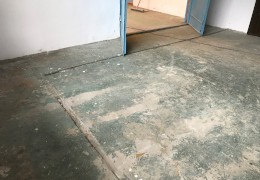
If the old paint is peeling from the substrate, it must be removed immediately. This is essential because when new layers of paint are applied, they will peel along with the old coating. 

Paint coatings can be removed mechanically using a putty knife. Why is the paint peeling and flaking off? The surface was most likely improperly prepared. 

To ensure proper adhesion of the applied paint coat, it's best to prime the walls. A primer reduces and evens out the absorbency of the substrate, ensuring uniform coverage.

One of the reasons for paint peeling off the walls is too many layers of paint previously applied, as well as the humidity in the apartment (more on this in the second paragraph). 

Example 

Sil-Grunt is a deep-penetrating, water-soluble primer designed for priming building surfaces both indoors and outdoors. Applied correctly, it increases adhesion, strengthens load-bearing capacity, and unifies the substrate's absorbency and cohesion, while maintaining its breathability. It prevents discoloration and stains from penetrating, and reduces topcoat paint consumption.

What to do when mold and mildew appear on the walls?

If mold or mildew has appeared on the wall surface, a special fungicide should be used. Causes of mold growth in rooms include moisture and poor ventilation. Very often, room ventilation is insufficient and requires special preparations to counteract the growth. 

Example  

Grzybostop is a fungicide designed to combat fungi and molds in building materials such as cement-lime mortars, cement mortars, and concrete. It is highly effective in combating molds and fungi that destroy the structure of building materials, penetrating deeply into the building material. It is easy to use. No specialized equipment is required, so you can perform mold removal yourself. It is also used for professional disinfection of mold-infested building walls.

Mold on walls often develops due to poor air circulation and high humidity. Once the mold spores are eradicated with Grzybostop, the problem cannot be allowed to return. Therefore, we recommend using Silanit W mineral paint , which allows the walls to "breathe" and contains special fungicidal additives.

What to do if there are gaps on the wall surface?

If there are any gaps in the walls, we recommend filling them with special fillers. A wall with holes is certainly unsightly.

Why do we encourage you to choose the products we offer? 

We offer paints from Polish manufacturers. We mix them on-site according to NCS or RAL color charts (a wide selection of colors), meaning they are always fresh and prepared specifically for individual customer orders. 

To help us choose the right paint for your needs, you need to answer a few basic questions: 

  • what room will be painted? 
  • What do I expect from painted surfaces?  
  • Is there a problem with high air humidity in the apartment?