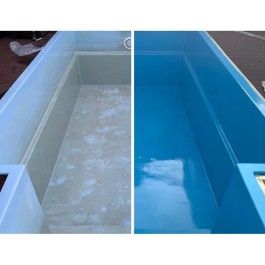
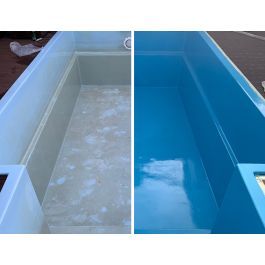
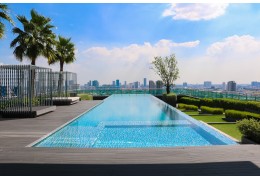
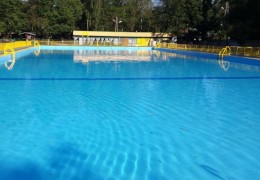
Painting tanks and pools allows for a smooth, easy-to-maintain finish. Unlike with tiles, there are no problems with grout joints. The first imperfections usually appear at the tile joints – seepage, cracking, and chipping. Furthermore, porous grout joints are prone to algae growth. Painting the tank with paint avoids these problems while achieving an aesthetically pleasing finish. We offer paints, coatings, and resins suitable for swimming pools, industrial water tanks, drinking water tanks, and even areas exposed to chemicals, such as sewage treatment plants.
Call us - we will help you choose the right coatings for waterproofing swimming pools and tanks: +48 717 026 346
Paints for tanks and swimming pools - advantages:
Smooth, uniform coating
No joints, which are often the cause of the first problems
Easy-to-maintain surface
The coating is smooth and slippery, making it difficult for algae to adhere to it
Tightness and resistance to water pressure
Paints for tanks and swimming pools - available solutions:
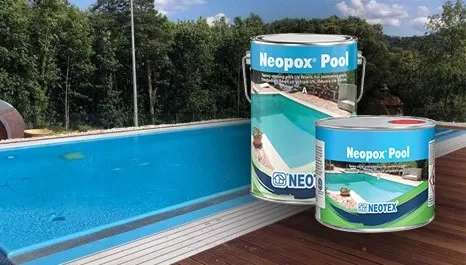
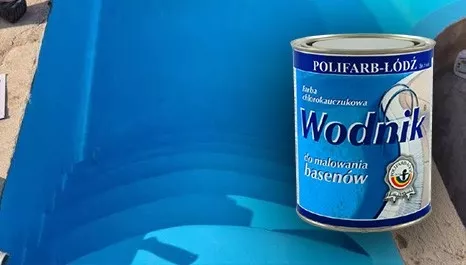
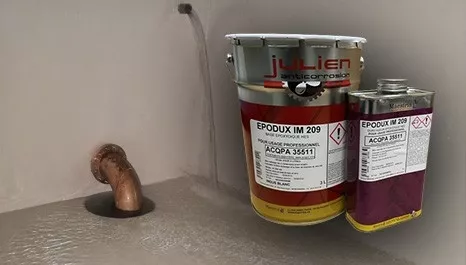
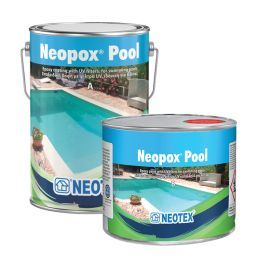
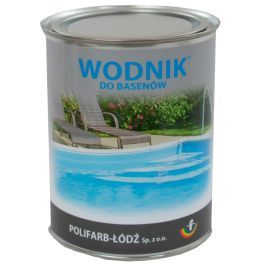
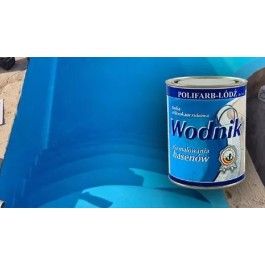
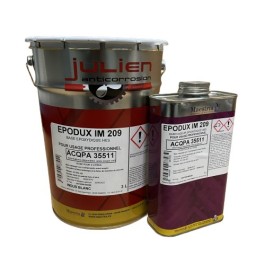
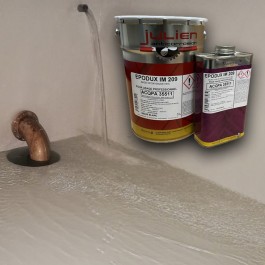
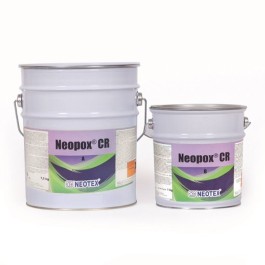
Neopox Pool - an epoxy pool paint containing UV filters, making it even more durable and resistant to weather conditions. Resistant to chlorine and pool cleaning products. Seals concrete, preventing leaks. Easy to apply, no separate primer required. Epodux IM 209 - a chemically resistant epoxy paint with UV filters, available in the full RAL color palette. Ideal for specialized applications such as sewage treatment plants, technical tanks, and structures permanently immersed in water. Wodnik - a single-component, chlorinated rubber pool paint. An economical system, but with a shorter shelf life than epoxy coatings. RO5500 - a solvent-free epoxy paint certified for contact with drinking water, for painting swimming pools and drinking water tanks.
Painting a poolis a simple way to achieve a durable, waterproof, and aesthetically pleasing finish. In this subcategory, you'll findpool paints—epoxy and chlorinated rubber.
Depending on whether you're painting a concrete tank, a polyester pool, or another surface, you should choose the right primer. The condition and quality of the substrate, as well as its ground-side waterproofing, are also crucial. Proper substrate preparation is crucial to ensuring the long-lasting durability and aesthetics of the topcoat.
In our offer you will find the right primer for various substrates and problems.
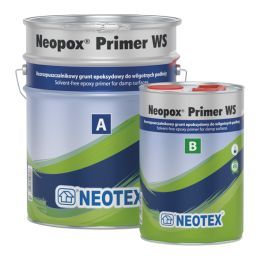
Standard system primers can be used on dry (humidity <4%), seasoned concrete substrates. However, when painting swimming pools or outdoor tanks, we always recommend usingNeopox Primer WSorNeopox Primer AY.
A video of painting a process water tank. A key factor in this project was the need to quickly refill the tank with water. An additional challenge was the lack of time to thoroughly dry the concrete after draining. Therefore, we selectedNeopox Primer WSEpodux IM 209was used as the topcoat, which cures easily in a humid environment and can be quickly refilled with water (typical epoxies can only be refilled after 10-14 days).
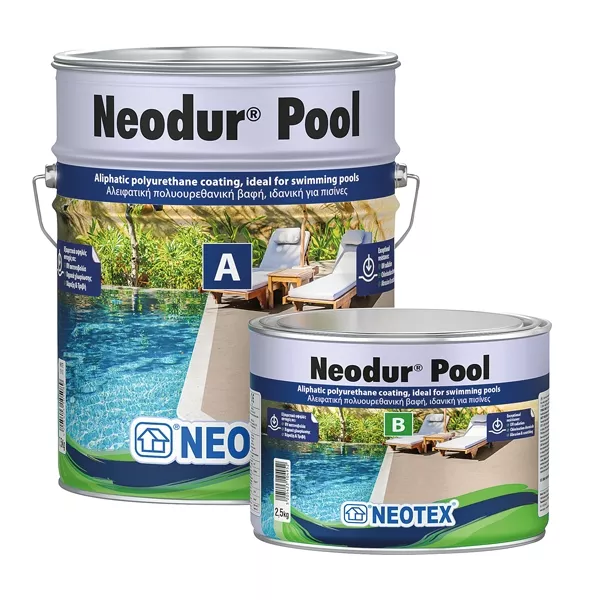
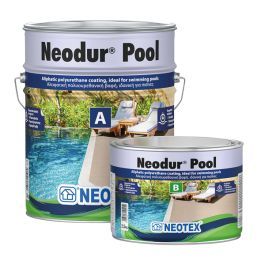
Two-component polyurethane paint for concrete, metal and polyester , as well as for tanks and ponds. Can be dyed in many colors from the RAL and NCS palette. Highly resistant to swimming pool chemicals, UV radiation and temperature fluctuations. Perfectly seals the substrate.
Two-component epoxy paint for concrete, metal and polyester swimming pools, as well as for tanks and fountains. Resistant to water and chemicals, as well as UV radiation, chlorine and temperature. Waterproofing pool coating that perfectly seals the substrate and prevents water seepage.
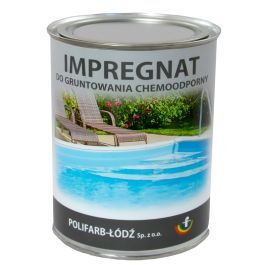
Impregnation for concrete and other mineral substrates. Perfect for priming swimming pools before applying Wodnik paint. Protects concrete elements in chemically aggressive environments.
Chemical-resistant epoxy for painting tanks, swimming pools, sewage treatment plants. For steel and concrete substrates. You can pour water over it after 30 minutes.
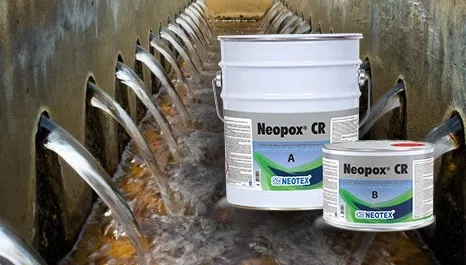
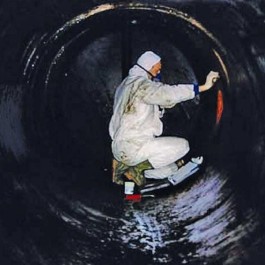
Chemically resistant epoxy resin for covering tanks requiring protection against aggressive chemical agents. It can be used in shafts, sewage tanks, water treatment plants, etc.
A complete balcony system that combines effective waterproofing with an aesthetically pleasing finish. This solution provides your balcony with durable protection against water and damage, while also providing an attractive appearance and a non-slip surface.
Are liquid pond liner and water tank paint the same thing?
keyboard_arrow_downkeyboard_arrow_up
Liquid foil is not the same as pool paint. Paints designed for pools can be used as a final topcoat, while liquid foil lacks adequate mechanical and chemical resistance and should be tiled. A very common mistake is using liquid foil under pool paint. Liquid foil is much more flexible than pool paint, and this will lead to peeling over time. The best substrate for pool paint is good quality concrete. Depending on the type chosen, pool paints seal the substrate, thus ensuring good waterproofing of the walls and bottom of the pool. One such solution is the epoxy resin-based product: Neopox Pool .
Renovation of a polyester pool - where to start?
keyboard_arrow_downkeyboard_arrow_up
Renovating a polyester pool begins by matting the surface. This is essential to ensure good adhesion for the paint. Then, wash the surface, preferably with pressurized water. Emulsol RN-1Epoxol Putty epoxy filler . After preparing the surface, we can begin applying Neopox Pool . Apply three coats – the first primer and two sealing coats, for a total consumption of approximately 0.4 kg/m². This ensures a tight and durable coating.
How to paint a drinking water tank?
keyboard_arrow_downkeyboard_arrow_up
To paint a drinking water tank, use products that are PZH-approved for contact with drinking water. One of the following products can be used for this purpose: Epimal 200RO 5500. Epimal 200 is a two-component, water-based epoxy paint. This paint provides a durable coating that is also highly resistant to chemical agents. Before applying the paint, the substrate should be primed with a suitable system primer (e.g. concrete substrate with Epimal G20 , steel substrate with Epimal Stal ). The coating should be applied in three layers. Theoretical coverage for a full coating will be 2.1 m2/l. During application and drying, remember about the minimum permissible temperature, i.e. 15 degrees C. The full curing time is 7 days from the application of the last layer. Before putting into service, the surfaces of tanks intended for direct contact with food and feed products should be left (seasoned) for 7 days at 20°C. After this time, the surface should be washed three times with water at +70°C, preferably under low pressure. After drying, the surfaces are suitable for use. The tanks can be flooded with water after 14 days from the application of the paint. RO 5500 paint is a two-component, epoxy, solvent-free paint. It can be used for tanks with water heated to +50 C. The product should be applied in two layers, each 100 microns thick. During application, remember to maintain the appropriate application and drying temperature (min. 10°C). The substrate must be primed (system primers similar to those used for Epimal 200 paint can be used). Before being put into service, surfaces intended for direct contact with food should be left (seasoned) for approximately 10 days at 20°C. In the case of lower surface and air temperatures, this time should be extended. Once dry, the surfaces are suitable for use. Tanks can be flooded with water 14 days after application (at +20°C).
How to prepare the surface for painting the tank?
keyboard_arrow_downkeyboard_arrow_up
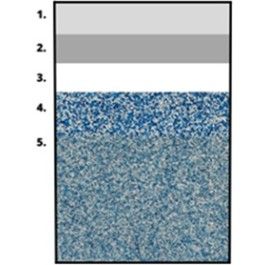
To begin painting a water tank, the substrate must be properly prepared. It's essential to remove surface dirt, prime, and fill any localized voids (if any exist). Starting with cleaning, the substrate should be sanded and then dusted. If the substrate is contaminated with other contaminants, the surface can be cleaned with a degreasing agent, such as Sulfanol A. Priming is a crucial step in surface preparation; it helps reduce the substrate's absorbency and ensures good adhesion of topcoats. Properly selecting a primer can also solve larger problems, such as capillary moisture (for buried tanks with poorly executed waterproofing). The most important criteria for selecting a primer include: - the expected temperature during application, - air humidity, - substrate moisture, - the waiting time between coats, and - the role of the selected primer. Solutions for problematic substrates: 1. Neopox Primer WS - fresh or damp concrete due to washing or rainfall 2. Neopox Primer AY - concrete absorbing moisture from the ground, no waterproofing 3. Epoxol Primer - dry concrete but requiring reinforcement 4. Neodur Fast Track PR - can be quickly repainted with subsequent layers 5. Neopox Primer 815 PR - steel elements.
Can you paint wet concrete?
keyboard_arrow_downkeyboard_arrow_up
Painting concrete with a moisture content <100% is possible after applying a suitable primer specifically designed for damp surfaces. This is Neopox Primer WS , which we recommend especially for damp exterior surfaces. When using this primer, you don't have to worry about rainfall the previous day, for example. It's important to apply the appropriate primer layer thickness. To achieve this, adhere to the theoretical consumption of 0.2-0.3 kg/m², depending on the moisture content and absorbency of the substrate. After 24 hours after applying the last coat, the surface should be uniformly glossy. If dull spots occur, repeat the priming process.
How to paint a concrete pool?
keyboard_arrow_downkeyboard_arrow_up
Neopox Pool epoxy pool paint . This two-component epoxy paint is resistant to chlorinated water and UV radiation. An additional advantage is that it can be applied directly to a dry concrete substrate. However, if moisture in the substrate or moisture associated with capillary action is a problem, an appropriate system primer should be used, such as: Neopox Primer WS – for application to damp concrete substrates, for example, due to rainfall; Neopox Primer AY – for application to concrete substrates experiencing capillary action (lack of adequate external waterproofing). The paint is available in white and blue. It should be applied in at least two coats, and each coat should be diluted with Neotex 1021 at a rate of 8% (for the first coat applied directly to concrete) and 4% (for the remaining coats). The technological intervals between applying subsequent layers should be 24 hours at 25°C. Full curing time is 7 days from the application of the last layer. This time may be longer, depending on temperature and humidity. Therefore, for safety reasons, we recommend waiting 10-14 days before filling the pool with water.





 Anti-corrosion
 Fire retardant
 Resin floors
 Roofs
Roofs
 Tanks and swimming pools
 Terraces and balconies
 Hygienic paints
 Facades and interiors
 Accessories
 Call:
Call: