Neoproof® PU W -40 ETA Waterproofing System - Bituminous Membrane
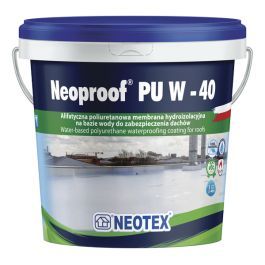
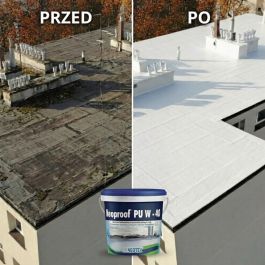
A water-based aliphatic polyurethane waterproofing system with an estimated service life of 25 years. Ideal for long-term protection of bituminous roof membranes.
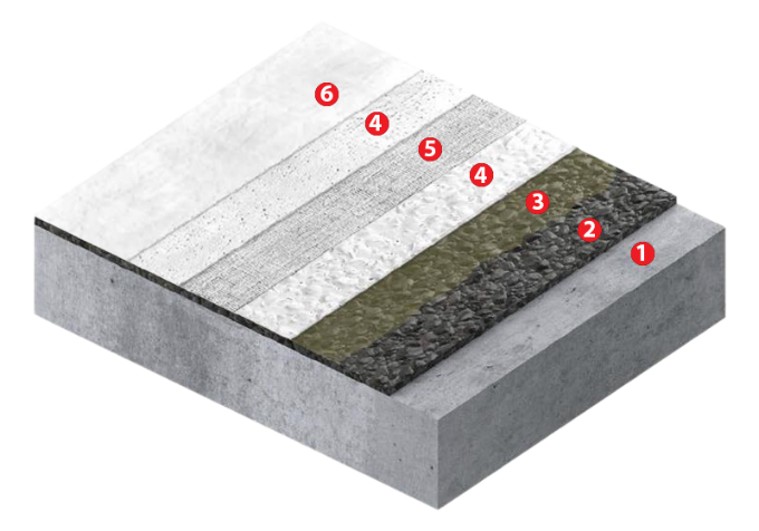
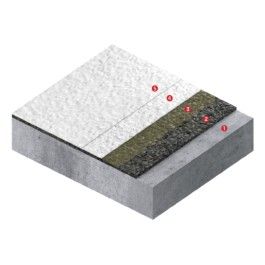
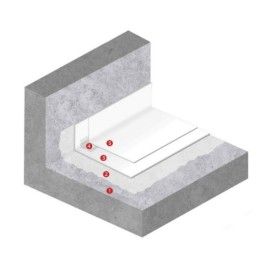
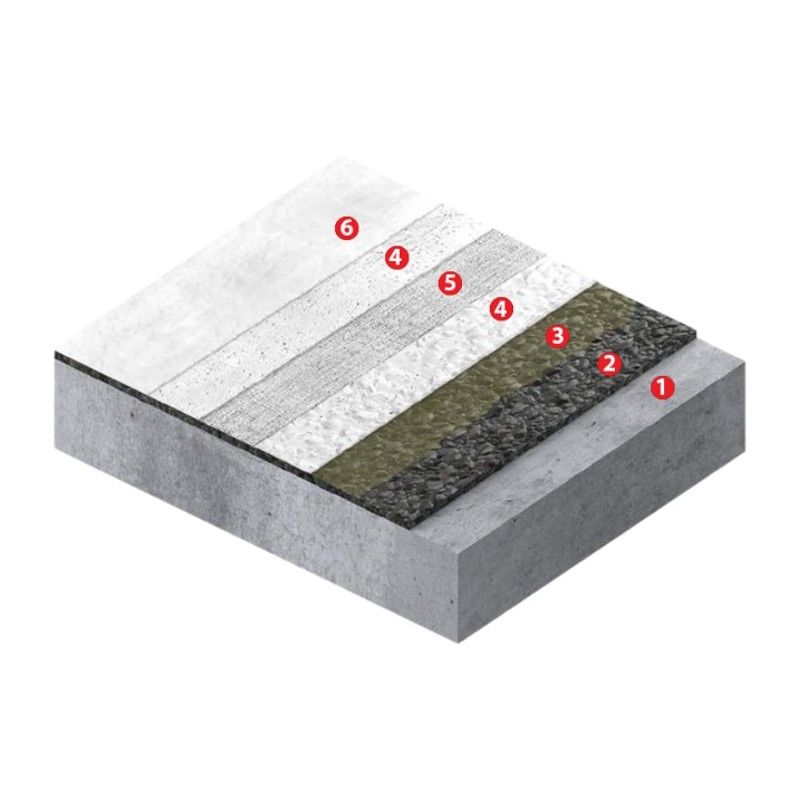
System diagram:
1. Concrete base
2. Bituminous membrane (roofing felt)
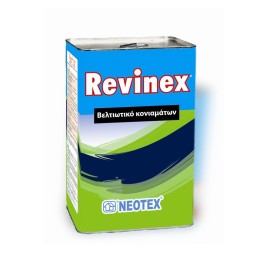
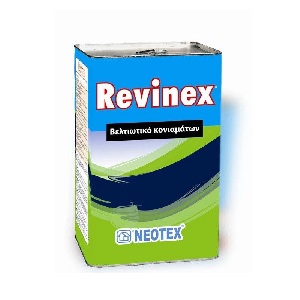
3. Priming: Revinex® diluted with water
4. Base waterproofing layer Neoproof® PU W -40
Wet-on-wet application of two layers with non-woven fabric in between
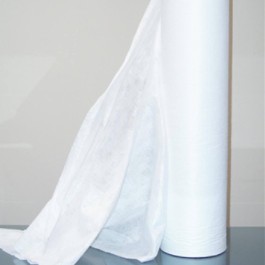
5. Neotextile® reinforcement layer
6. Top waterproofing layer: Neoproof® PU W -40
Key features:
- Resistant to extremely low temperatures
- Exceptional adhesion to bituminous membranes
- Excellent resistance to standing water.
- Excellent resistance to UV radiation and unfavorable weather conditions.
- Certified cooling roof properties (for white color).
- Certified high resistance to external fire.
- High crack-bridging ability and high mechanical strength.
Certificates:
- ETA
- UV resistance
- CE
- Cool material
- fire resistance
| Construction of the Neoproof® PU W -40 ETA system - bituminous membrane and approximate consumption |
| Layer |
Product |
Wear |
|
Priming*
|
Revinex® (diluted with water 1:4)
|
~70 g/ m2 in one layer |
|
Waterproofing layer
|
Neoproof® PU W -40 |
≥2.5 kg/m2 in three layers reinforced with Neotextile® |
|
(1) Application of two layers using the wet-on-wet method, with a fabric sandwiched between them
(2) Application of 1–2 unreinforced topcoats
|
|
Strengthening
|
Neotextile®
|
~1.1 m2/m2 |
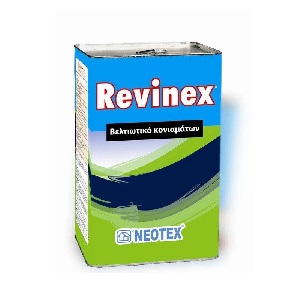
Revinex® - improves the adhesion of elastomeric roofing membranes Neoroof and Neoproof PU W-40
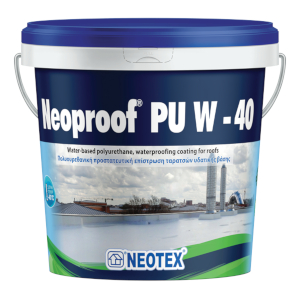
Neoproof® PU W -40 - Single-component roof waterproofing for cold application. Recommended for roofs covered with felt, concrete flat roofs, and metal roofs. Resistant to UV and mechanical loads. Creates a smooth, uniform waterproofing layer without joints, resistant to a wide temperature range from -40°C to +80°C . It has solar reflective and "cool roof" properties confirmed by the Cool Material certificate (white).
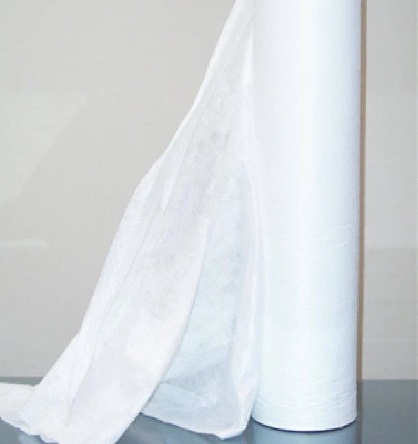
Neotextile® - reinforces waterproofing membranes. For bonding vertical-to-horizontal joints and for bonding various types of substrates before applying the membrane, e.g., felt-to-metal.





 Roofs
Roofs
 Resin floors
 Tanks and pools
 Terraces and balconies
 Anti-corrosion
 Hygienic paints
 Fireproof
 Facades and interiors
 Accessories
 Call:
Call:




 +48 717 026 346


 +48 717 026 346