




 Anti-corrosion
 Fireproof
 Resin floors
 Roofs
Roofs
 Tanks and pools
 Terraces and balconies
 Hygienic paints
 Facades and interiors
 Accessories
 Call:
Call:
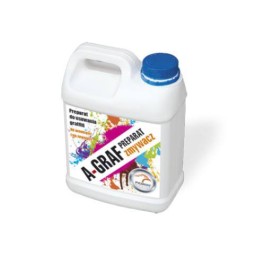
A product for removing graffiti and other contaminants from delicate materials, including paint coatings and anti-graffiti systems.
From 61.01 PLN

The problem of unsightly scribbles appearing on walls has become so problematic these days that paint manufacturers have decided to address it with anti-graffiti systems. This is a significant relief for property owners and small architectural structures – after properly protecting a facade, for example, there's no need to repaint the entire surface. Anti-graffiti systems are divided into permanent and semi-permanent. Below, we'll briefly explain the difference between them and the surfaces they can protect.
A basic anti-graffiti system based on the waxy A-Graf . The coating also has an anti-poster effect. This is a "lost coating" method – it is partially removed along with the paint used to create the inscriptions and drawings. After cleaning, the coating must be replenished. The protective layer allows for easy removal of dirt with pressurized water (for very rough surfaces, warm water is preferred). An additional advantage is that it isolates the surface from harmful atmospheric factors, air pollution, moss, etc. The need to renew the coating may seem burdensome, but experience tells us that it only takes two or three times. Graffiti artists quickly become discouraged because the paint runs, blurs, and the graffiti itself doesn't look as desired.
The agent can be used to protect porous surfaces:
A system based on a water-based, two-component polyurethane varnish. This protection requires no renewing and maintains its properties for 5 years or up to 50 cleanings. When protecting porous surfaces, the first step is to prime the substrate with one layer of A-Graf . This stabilizes unprepared substrates, isolates them from the topcoat, and ensures the durability of the coating. Then, apply two layers of A-Graf 2K . When protecting dense substrates (PVC, road signs, plastic panels, etc.), do not prime the substrate—simply apply the topcoat directly. Clean the protected surfaces with pressurized water (max. 50°C, 60 bar) or use the system-based A-Graf . As with the semi-permanent system, you also gain anti-poster properties and protection against harmful weather conditions, moisture, moss, etc.
If the graffiti artists beat us to it, before we had time to secure, for example, the facade, we have two options:
In the case of unprotected surfaces, no one can give us a 100% guarantee that the graffiti will be completely removed, especially if the surface is porous.
A product for removing graffiti and other contaminants from delicate materials, including paint coatings and anti-graffiti systems.
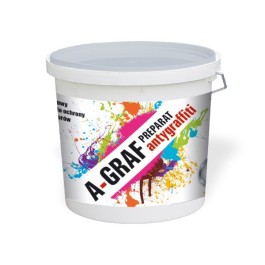
A wax-based agent based on organic solvents for protecting walls against graffiti. It also makes it difficult to stick posters.
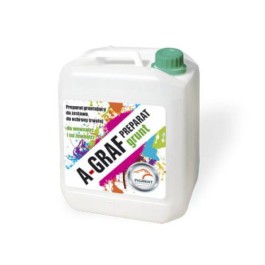
Water-based agent for priming the surface before applying permanent anti-graffiti protection products.
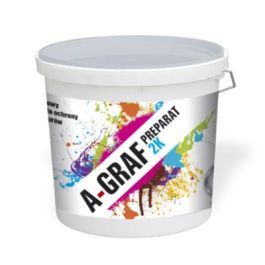
Polyurethane varnish for protecting walls against graffiti painting, making it difficult to stick posters.


Proven products
We offer products with high durability and technical parameters, ensuring long-lasting results.

Help in choosing
Wondering which products will best suit your needs? Call us – we'll advise you and choose the right solution.

Contractor support
Need help with construction work? Let us know, and we'll recommend trusted contractors.

Stationary points
Want to pick up your products in person? Or perhaps you'd prefer to chat face-to-face? Visit our branches in Warsaw, Wrocław, Katowice, or Gdańsk.

Wholesale orders
Looking for systems and products for investment? Send us your phone number and we'll call you back with an offer including an investment discount.